


Deforestation

Comic by Matilde Landi
Click to view
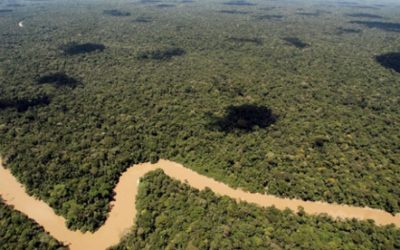
The Amazon rainforest is the largest tropical forest on Earth. Its destruction would mean a disastrous loss of biodiversity, acceleration of climate change, and disruption of global weather patterns.
Deforestation comes in many forms. Typically, it begins with the construction of a road, granting loggers, farmers, miners and hunters access to previously isolated areas. About 95% of all forest destruction in the Amazon occurs within 5 km of a road 1.
Both local and international economic demand drives deforestation, as swaths of forest are slashed and burned for subsistence plots as well as industrial plantations. The vast majority of deforestation in the Amazon and in other tropical forests results from cattle ranching and soybean production 2. Furthermore, government programs and policies, such as those for increased transportation infrastructure, can lead to unintentional deforestation as roads are built through the forest.

Overall, approximately 17% of the Amazon has been deforested over the last half-century 4. This may not seem like much, but scientists say that in order to maintain the minimum amount of rainfall needed for the forest to survive, a minimum of 70% of the Amazon must stay intact. At the current rate of deforestation, we may pass this threshold within the next 50 years. What’s more, eighteen of the Amazon’s 32 major forested ecoregions are projected to lose more than 40% of forest cover by 2050 and 12 more than 70%.


Trees in the Amazon play a crucial role in regulating global weather patterns. Through transpiration (or releasing water from the leaves of the trees) and other mechanisms, they create clouds that cause precipitation around the world. Scientists report that deforestation of the Amazon would lead to significant drying not only of that region, but also areas as far away from South America as the Midwest United States and West Africa 5.
Moreover, the Amazon rainforest is one of the most biodiverse regions in the world, with a new species being discovered every three days for the past decade. It provides much of the food we eat, and numerous compounds found in modern medicine. Such treasures are irreplaceable.
References
- Laurance, William F. “Roads to Ruin.” The New York Times. The New York Times, 12 Apr. 2015. Web. 3 May 2015.
- NASA. “Tropical Deforestation : Feature Articles.” Tropical Deforestation. NASA: Earth Observatory, n.d. Web. 02 May 2015.
- Amigo, Ignacio (February 12, 2020). “When will the Amazon Hit a Tipping Point?” Nature. https://www.nature.com/articles/d41586-020-00508-4.
- World Wildlife Fund. “Threats: Deforestation.” WorldWildlife.org. World Wildlife Fund, n.d. Web.
- Lawrence, D., and Vandecar, K. (2014) Effects of tropical deforestation on climate and agriculture. Nature Climate Change, published online: 18 December 2014. doi: 10.1038/NCLIMATE2430


Learn More about Deforestation
Cutting down on cutting down
This article from The Economist discusses what changes have taken place in Brazil since the 1990s to turn the country from a leader in deforestation to a model of preserving rainforest. With rampant deforestation still in effect in the tropical forests of Africa and...
Ecuador signs permits for oil drilling in Amazon’s Yasuni national park
Companies could start extracting oil underneath key biodiversity reserve on Earth by 2016. Original story from the guardian. Drilling for oil in a part of the Amazon rainforest considered one of the most biodiverse hotspots on the planet is to go ahead less than a...


 Valeria McFarren


